
Megastore Tidy Up Together Advanced Mechanics and Optimisation
Throw mechanics, product cycling, sweep patterns, escalator efficiency, and advanced co-op callouts for experienced players.
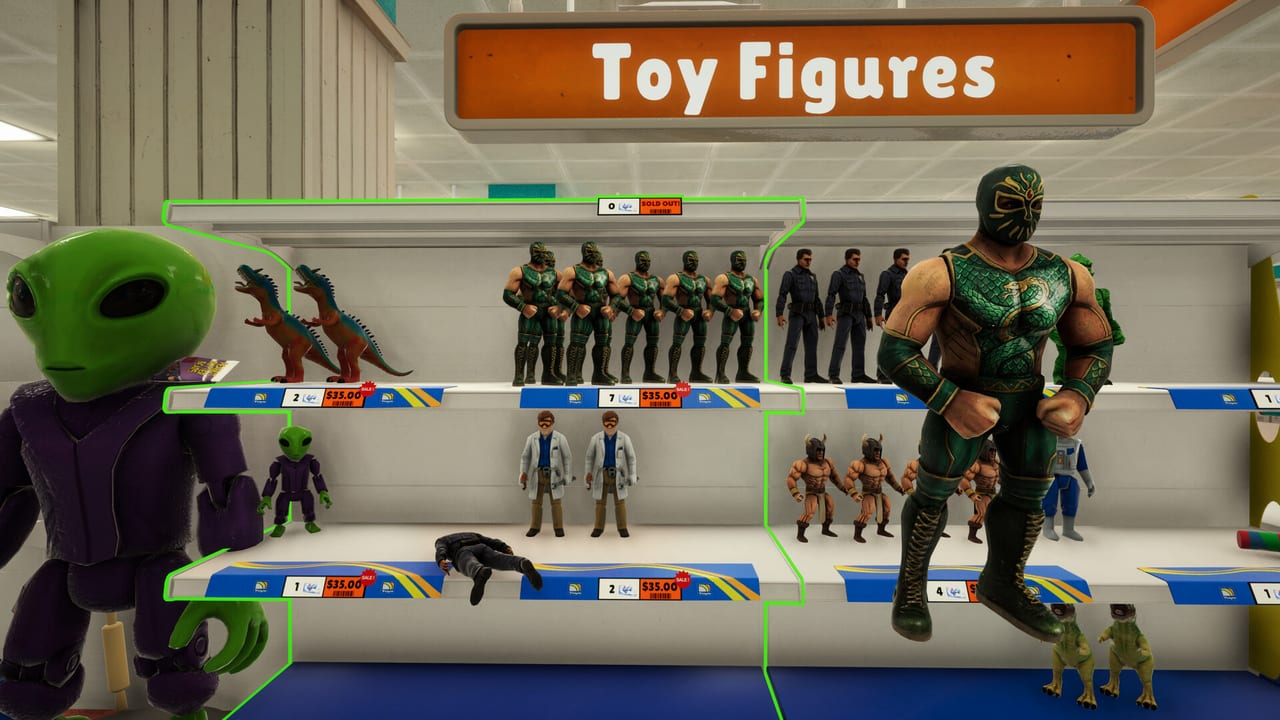
This page covers advanced techniques for players who have completed at least one full store run and understand the core loop. If you are still learning signs and green highlights, start with Getting Started and the Toy Store walkthrough first.
Megastore: Tidy Up Together released on Steam for Windows on 2 September 2026. The techniques here are derived from player reports and observation of high-efficiency runs. They complement the skill tier list, sorting faster, and co-op roles pages.
Throw Mechanics and Product Cycling
Throw (R) Behaviour
The Throw action ejects the bottom item from your carry stack in the direction you are facing. This is distinct from placing a product on a shelf. Throw is useful for:
- Clearing your stack quickly when switching product families
- Depositing items in a temporary holding zone before returning to a specific bay
- Creating separation between mixed products in your hands
Throw does not place products on shelves. It deposits items on the ground. Use it only when you intend to re-collect the thrown items later.
Product Cycling
Switch Product (default key noted in controls) cycles which product is at the top of your carry stack. The HUD shows the current SKU and its remaining count. Use product cycling when:
- Your stack contains mixed families and you need the correct SKU on top for the next bay
- You are carrying a full mixed stack and need to deposit specific items without carrying all of them
- A bay requires one specific product from a larger stack you are holding
Auto-sort groups matching products as you pick them up, but it does not separate mixed families. Product cycling lets you access any item in your stack without dropping the entire carry.
Stack Management in Dense Departments
In departments with high product density (Supermarket produce, Toy Store Pretend Play), carry stacks can become visually cluttered. The compact tool shrinks how your stack sits in view. This is not just a comfort option; in dense departments it can reveal a product that was obscured by your carry pose.
Floor Sweeping Patterns
The Spiral Approach
For Toy Store and Supermarket, a spiral pattern from entrance to rear of the store ensures you cover every aisle without crossing your own path. Start at the entrance, work the perimeter aisles, then spiral inward toward the back zones. This prevents the common problem of completing one side of the store and forgetting the opposite side.
The spiral approach works well in Normal and Casual difficulty. In Hardcore difficulty, add a dedicated endcap pass at the end of each spiral lap because Hardcore scatter pushes more products to these high-visibility positions.
Department-First vs. Aisle-First
Department-first: Complete one entire department before moving to the next. Pros: You finish departments completely, which provides psychological wins and accurate remaining counts per zone. Cons: You may cover more walking distance.
Aisle-first: Work one aisle through all departments before moving to the next aisle. Pros: Less backtracking. Cons: Multiple partial completions can make remaining count tracking harder.
Department-first is recommended for most runs. The psychological momentum of completing a department outweighs the marginal walking efficiency gain of aisle-first.
Height-Order Searching
Always search in height order: floor, then waist level, then shoulder height, then top decks. This prevents the common error of finding a floor item and walking past a top-deck item that belonged to the same SKU count.
For last-item hunts, this height-order principle becomes critical. The hidden items page has the full protocol.
Escalator Efficiency in the Megastore
Escalators are the Megastore’s primary vertical transport and its biggest clutter liability. Products that fall on escalators accumulate at the bottom landing and on the steps themselves.
Magnet Pull as Escalator Sweep
Run magnet-style pull at the escalator bottom landing at the end of every floor lap. Do not wait until the end of the session. Escalator accumulation compounds: products at the bottom attract attention from players walking through, and each crossing displaces more items.
Up vs. Down Escalator Priority
If you must cross an escalator while it is carrying floor products, cross at the top landing. Products that fall at the top tend to roll to the sides. Products that fall at the bottom accumulate in the landing zone.
Carrying Large Items on Escalators
Do not carry large items (appliances, ride-on toys, furniture) on escalators. Use the elevator or make two trips with the crate tool. Large items on escalators are the primary cause of escalator pile-ups that require extended magnet pull sessions.
Advanced Co-op Callouts
The Three-Callout System
Experienced co-op pairs use a minimal verbal protocol:
- Bay call: “Bay twelve, two dinosaurs” — tells your partner what SKU and how many are going to a specific bay
- Floor call: “Floor at escalator” — indicates a product concentration requiring magnet pull
- Last-item call: “One missing, produce” — narrows the hunt to a specific department and product type
This system requires both players to have headsets or proximity voice chat. Text chat is not practical during active sorting.
Role-Specific Callouts
The fetcher should call floor concentrations before they become pile-ups. The shelver should call bay completion so the fetcher knows which bays are done and can skip them.
When the remaining count stalls, the shelver takes the flashlight and calls last-item positions. The fetcher continues with magnet pull on active floors rather than joining the hunt.
No-Skills Co-op Callouts
If running a no-skill achievement attempt in co-op, add a fourth callout type:
- Skill check: Either player calling “skills off” before using any ability, to confirm the session rule is being followed
A partner accidentally firing Magnet in a no-skill run voids the achievement for all players in that session. Confirm skills-off before each store entry.
Optimal Session Habits
Screenshot Protocol
Screenshot the HUD remaining count before quitting any session over one hour. Name the screenshot with the store, date, and remaining count. This creates a reference if you return to the same save file.
Department Boundary Saves
Save at the boundary between departments, not at arbitrary time intervals. A save at the bakery-to-produce boundary gives you a clean restart point that corresponds to your actual progress, not to a clock.
Tool Remap for Advanced Players
After 50+ hours, most players develop a custom keybind setup. The most effective advanced remaps:
- Move Throw to a more accessible key than default R
- Bind flashlight to a thumb mouse button for instant access
- Separate grab from the default controller trigger if playing on pad
The controls guide has the full remap reference.
When to Break the Rules
Advanced techniques are context-dependent. The spiral pattern assumes you are working alone. The three-callout system assumes a committed co-op pair with voice chat. The height-order search assumes you are not under timer pressure.
The one constant is the remaining HUD count. Every technique exists to move that number toward zero efficiently. When a technique stops working, trust the number, not the technique.
Frequently Asked Questions
Quick answers to the most common questions.
What is the difference between Throw and placing a product on a shelf?
Throw ejects the bottom item of your carry stack onto the ground in the direction you are facing. It does not place products on shelves. Use Throw to clear unwanted items or create temporary holding zones, not for shelf completion.
When should I use product cycling?
Use Switch Product when your stack contains mixed families and you need the correct SKU on top for the next bay. Auto-sort groups matching products but does not separate mixed families. Cycling lets you access any item in your stack without dropping everything.
What is the most efficient floor sweep pattern?
Department-first spiral from entrance to rear is recommended for most runs. It provides psychological momentum from completed zones and accurate per-department remaining counts. Aisle-first saves marginal walking distance but complicates tracking.
How do I handle escalator piles efficiently?
Run magnet-style pull at the escalator bottom landing at the end of every floor lap, not just at the end of the session. Do not carry large items on escalators; use the crate tool with two trips instead.
What is the three-callout system in co-op?
Bay call (what SKU and quantity), floor call (product concentration needing magnet pull), and last-item call (specific department and product type). The fourth callout in no-skill runs is 'skills off' to confirm ability-free status.
When should I ignore standard techniques?
When the remaining HUD count disagrees with the technique. Trust the number. Every advanced method exists to move the counter toward zero; if a method stops working, the count is the authority.