
Megastore Tidy Up Together Products and Shelf Types Catalog
Every product family, shelf type, and the visual matching rules that govern placement across all three stores.
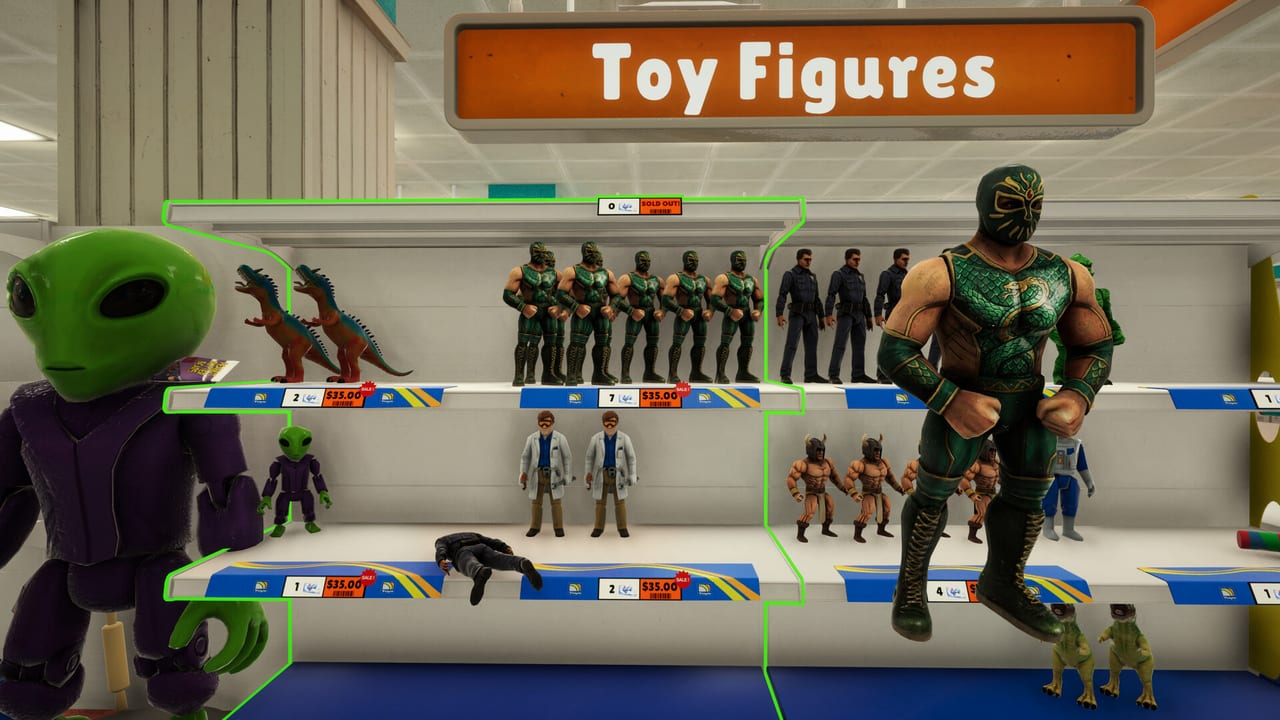
Megastore: Tidy Up Together contains 1,114 unique products and 53 shelf types across its three launch stores. This page is the reference catalog. Use it to understand product families, shelf categories, and the visual matching system that drives the entire game loop.
Yolo Games Studio released the Steam Windows build on 2 September 2026. The three stores are Toy Store (3,555 items, 297 shelves), Supermarket (7,934 items, 487 shelves), and Megastore (13,380 items, 978 shelves). The product catalog scales with store size: the Toy Store draws from a toy-and-seasonal pool, the Supermarket from grocery and household goods, and the Megastore combines and expands both pools across nine departments.
How Product Matching Works
The game identifies correct placements through a combination of visual cues and spatial logic:
Department signs mark each section. Products must match the sign category. A toy helicopter belongs under the Toy Figures sign, not the Plushies sign, even if both are in the toy area.
Green outline highlights fire when a carried product matches a shelf slot in the world. This is Product Highlight at work. The green glow is the primary confirmation that a placement is correct.
Auto-sort in hand groups matching products automatically. When you pick up five dinosaur figures, the HUD shows them as a counted stack. This is the grouping system, not a product identification system.
Shelf Highlight fires on the target bay, not the product. When you carry a correct match, the destination shelf bay glows green. That is the shelf confirming it wants that product.
Product Families by Store
Toy Store Product Families
The standalone Toy Store contains these primary families:
- Toy Figures: Action figures, superhero dolls, wrestler figures. Distinctive packaging with character art.
- Plushies: Soft toys in various sizes. Easier to identify by colour and size than by packaging.
- Board Games: Boxed games with varying box dimensions. Shelf types for board games are deeper than other toy shelves.
- Puzzles: Flat-boxed puzzles with cover art. Stack neatly but can slide during transit.
- Pretend Play: Costume accessories, play food sets, toy tools. Recognizable by bright primary colours.
- Educational Toys: Science kits, building sets, learning toys. Often have instructional inserts.
- Retro Toys: Vintage-style items including lava lamps, classic games, nostalgia products. Higher visual distinctiveness.
- Seasonal Items: Summer ride-ons, inflatable products, outdoor toys. Often irregularly shaped.
- Checkout Lane Extras: Small items near registers including candy, magazines, and impulse buys.
Supermarket Product Families
- Fresh Produce: Fruits, vegetables, herbs. Smaller items with high unit count per display.
- Bakery: Bread, pastries, baked goods. Packaging varies from plastic-wrapped loaves to open trays.
- Fish and Seafood: Refrigerated products with ice and transparent film packaging.
- Dairy: Milk, cheese, butter, eggs. Refrigerated section with consistent packaging dimensions.
- Grocery Dry Goods: Canned goods, pasta, cereal, packaged foods. High-density shelving.
- Beverages: Bottled drinks, cartons, cans. Heavy items that affect carry speed.
- Household Cleaners: Bottles and boxes for cleaning products. Chemical symbols on packaging.
- Personal Care: Toiletries, cosmetics, pharmacy items. Smaller product footprint.
- Checkout Lane Groceries: Final Navarre items at registers.
Megastore Expanded Families
The Megastore adds these departments beyond the Supermarket pool:
- Electronics Small: Cables, chargers, headphones, gaming accessories. Small but dense packaging.
- Electronics Large: Display units, small appliances, entertainment devices. Irregular box shapes.
- Clothing: Garments on hangers, folded items, accessories. Requires orientation as well as placement.
- Home Goods Housewares: Kitchen tools,餐具, home décor. Extreme size variance.
- Home Goods Furniture: Larger items including picture frames, mirrors, cushions.
- Books and Stationery: Books with visible spines, notebooks, office supplies. Spine-out facing requirement.
Shelf Types Reference
The 53 shelf types fall into these functional categories:
Standard Shelving: Flat shelves in varying depths. Most common type. Products must be facing forward with packaging visible.
Gravity Feed Shelves: Angled shelves where products slide forward automatically. Common in饮料 and snack sections.
Display Cases: Enclosed or open-front cases for bakery, fish, and dairy. Require door opening before restocking.
Hanging Rail Systems: Clothing hangrails and accessory bars. Items must be properly oriented on hangers.
Pegboard Panels: Hook-based displays for small packaged items. Products hang from pegs.
Endcap Displays: Extra-face shelving at aisle ends. High-visibility positions for products requiring promotion.
Checkout Counters: Specialized zones at register positions. Mixed product types from returns and impulse items.
Refrigerated Units: Temperature-controlled shelving for cold products. Door or lid must be opened before access.
Stair-Style Display: Stepped shelving common in Megastore home goods. Products visible from multiple heights.
Carry Size and Product Categories
Product size affects carry capacity:
Small items (dairy yogurt cups, small toys, stationery): High stack count. A full stack can reach 15 products with Stack Capacity upgrades.
Medium items (board game boxes, bread loaves, beverage bottles): Moderate stack count. 8 to 12 per stack depending on product dimensions.
Large items (ride-on toys, large appliances, furniture accessories): Single-item carries. These require the crate tool for efficient transport.
Irregular items (inflatable products, clothing on hangers, fish on ice): Require specific carry poses. The game automatically adjusts hold animation for these categories.
Product Identification Tips
Players commonly confuse similar product families. These are the most frequently mis-placed categories:
- Toy Figures vs. Action Figures: Both are in the toy area. Toy Figures tend to be less articulated; Action Figures have more detailed sculpting.
- Pretend Play vs. Educational: Pretend Play is role-play items; Educational has instructional content.
- Fresh Produce vs. Bakery: Both can appear in refrigerated zones. Produce requires cold; bakery may not.
- Electronics Small vs. Personal Care: Both are small packaged goods. Electronics has device imagery; personal care has health and beauty symbols.
Last Items in Product Context
The three commonly reported last items relate to product distinctiveness:
- Yoyo: Small, high contrast, easy to lose in a mixed toy pile. Often hides among board game boxes.
- Letter-V Foam Board: Large format but visually similar to puzzle displays when partially obscured. Requires height-order search.
- Basketball in Hoop: The hoop itself is store décor; the ball is a product that must be placed in the hoop. Players miss this because the hoop looks like set dressing.
The hidden items page has the full hunt protocol for these items.
Frequently Asked Questions
Quick answers to the most common questions.
How many unique products are in the game?
1,114 unique products across all three launch stores, with 53 distinct shelf types. Toy Store uses a toy-and-seasonal pool; Supermarket uses grocery and household; Megastore combines and expands both.
How does product matching work in the game?
Department signs mark sections. Green outline on a product in the world (Product Highlight) fires when it matches a shelf bay. Green on the shelf bay (Shelf Highlight) fires when you carry the correct product. Auto-sort groups matching items in your hands.
What are the hardest products to place correctly?
Clothing items require correct orientation on hangers, not just placement. Electronics has irregular packaging that affects carry animations. Fish products require refrigerated case access before restocking.
How does product size affect carry capacity?
Small items like stationery can stack to 15 with full upgrades. Medium items like board game boxes hold 8 to 12. Large items like ride-on toys require the crate tool or single-item carries.
Why do I keep placing products in the wrong bay?
Check the department sign, not just the aisle. Toy Figures and Plushies are both in the toy zone but require different shelf types. Green highlights only fire for exact category matches, not neighbouring families.
What is the V-shaped foam board and why is it hard to find?
Puzzle Foam V is a large-format foam puzzle piece. After hotfix 1.0.1 it sits on the floor of the Toy Store corner plushie section on new saves. It is visually similar to puzzle displays and requires height-order searching. See hidden items.